You buy a sweater from a major basics retailer in February. By April, the new spring weight is on the same rack and last winter's sweater is on a clearance table. By June, the unsold ones are not in stores at all. They are sitting in a warehouse waiting for a decision.
The actual landfill number
Roughly 73% of the material going into the clothing system ends up in landfills or incinerators after final garment use, per the Ellen MacArthur Foundation. Count the whole lifecycle, production offcuts and unsold stock included, and the Foundation puts the figure at 87% of total fibre input. In the US, about 85% of discarded textiles are landfilled or incinerated, per the US EPA. The Foundation also estimates that the equivalent of one garbage truck of textiles is landfilled or burned every second.
A smaller cut of that flow goes to off-price channels. An even smaller cut, the cleanest cut, comes to Concier, gets steamed, hung, and worn by a traveler in a hotel room for a long weekend.
Why the supply story does the most work
That is the supply story. It is the part of Concier that does the most work in a conversation. People understand a curated wardrobe. People understand a hotel room. The part that earns the trust is the upstream side. Where do the clothes come from. Are they new. They are already-made clothes getting a second life, whatever the brand, and that is the point.
Where Concier sources from
Concier sources from past-season inventory at brand partners. The pieces are last season's cuts, last season's prints, last season's colorways, and last season's sizes that did not move at full price. They are not damaged. They are not worn. They are not seconds.
We take a portion of that inventory off the partner's books. We route it into our closet system, which is sized at the city level. Paris gets the kind of past-season pieces that read in Paris. Miami gets warm-weather basics from a brand partner. The brand partner sees a clean exit channel that is not a discount store and is not a landfill.
The wear cycle
A guest stays three nights. The pieces they actually wore come back to our operations site after the stay. They get steamed, inspected, photographed, and queued for the next room. Across a season, the same blouse might go on twenty trips. The denim on ten. The cashmere on five.
What happens at end of cycle
At end of cycle, the pieces age out. The dressier items move to a small partner consignment shop. The casuals go to brand partners' takeback programs where those exist. The end-of-life pieces get routed to textile-to-textile recycling rather than landfill. The end of a garment's life is the hardest part of any honest sustainability story.
How the rental works
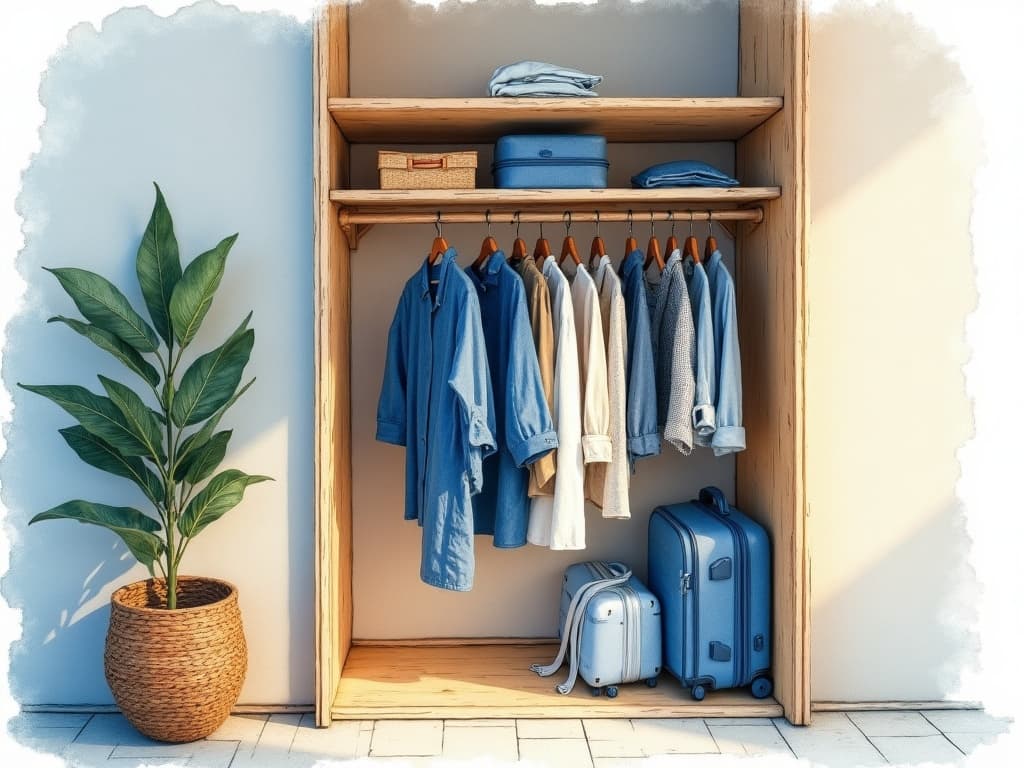
Concier is a rental, plainly. You choose a pass in the app, and your closet reflects what the pass includes. You wear the pieces during your stay and leave them when you go, and the wardrobe stays in the building for the next guest. If a piece becomes yours, you keep it and get charged for that piece. The same garment, well cared for, gets worn many times by different people staying in the same building, until it is genuinely done. It is closer to library science than to a one-shot rental and return.
Frequently asked questions
Where do the clothes Concier uses come from?
Past-season inventory at brand partners. Pieces that were perfectly good and did not move at full price before the next collection landed. Already-made clothes getting a second life, whatever the brand.
What happens to a piece when it is too worn to use?
It routes to a brand takeback program where one exists or to a textile-to-textile recycling partner where it does not. We do not send pieces back to landfill at end of cycle.
Is this a rental?
Yes. You choose a pass in the app, wear the pieces during your stay, and leave them for the next guest. If you love a piece, you can keep it and get charged for it. The same piece gets worn many times in the same building by different guests, so it is closer to library science than to a one-shot rental.
Related reading
- Where last-season inventory actually goes when it does not sell
- Rescued from the landfill, worn by you. The honest version.
Concier is in beta. The waitlist is open at concier.app. Cities open one at a time, and the early list gets first access to each one. If you want your wardrobe waiting at your hotel when you land, that is the door.